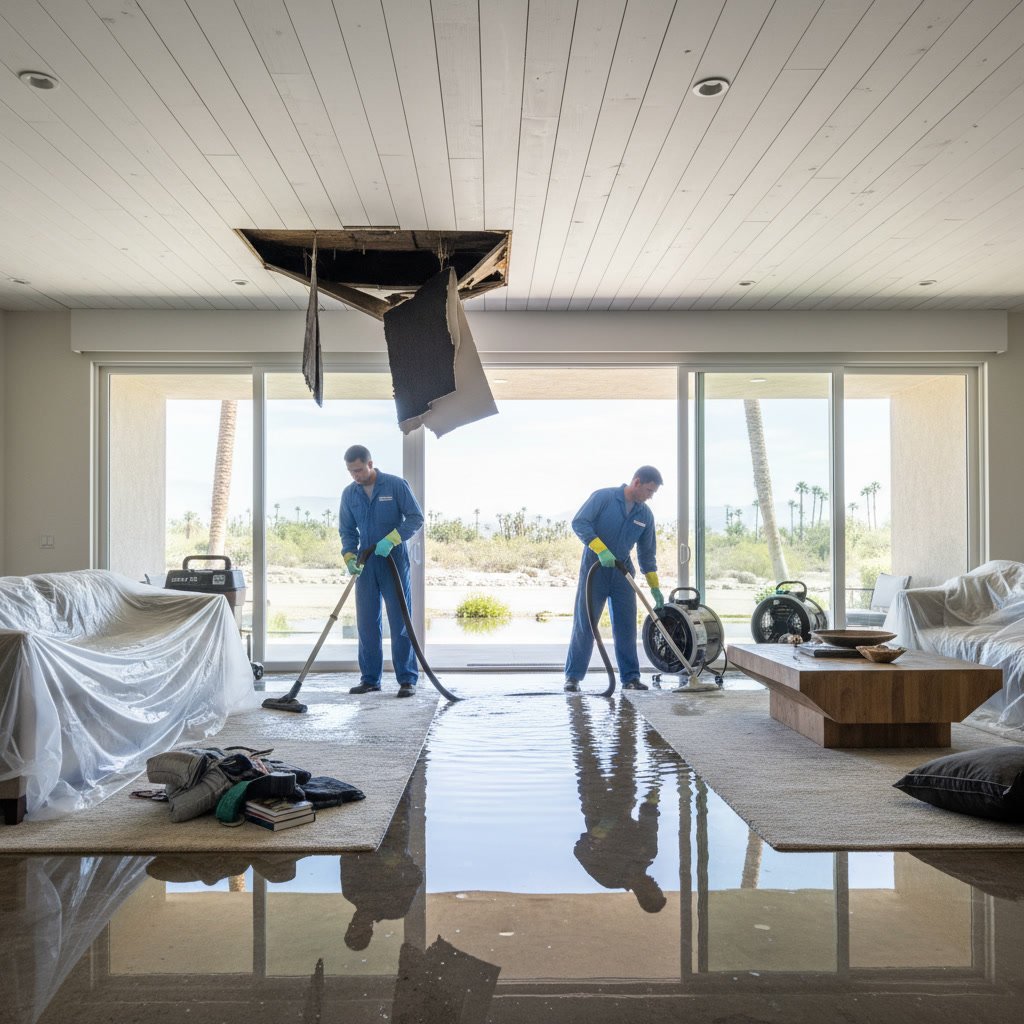
Water pouring through your ceiling. A flooded bathroom. A mysterious puddle spreading across your living room floor. When you discover water damage Rancho Mirage homeowners face a critical window of 24 to 48 hours where quick action can mean the difference between a manageable repair and a catastrophic loss. The desert climate in the Coachella Valley might seem like it would help dry things out, but water damage requires immediate, systematic response regardless of your location.
This guide walks you through exactly what to do in those crucial first hours and days after discovering water in your home. You’ll learn which steps to take first, what to document, when to call professionals, and how to protect both your property and your health.
Stop the Water Source Immediately
Your first priority is stopping additional water from entering your home. Every minute counts, and every gallon that continues to flow multiplies the damage exponentially.
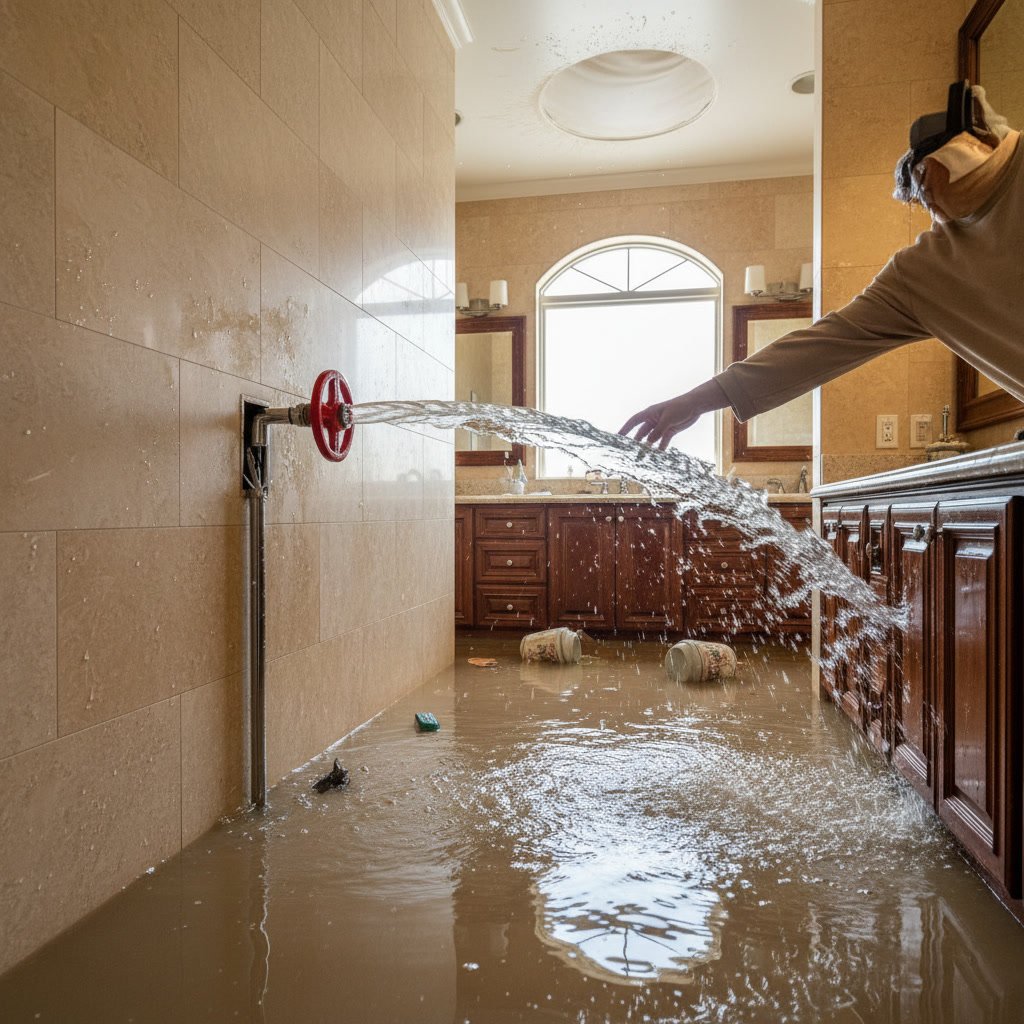
If the water comes from a burst pipe, broken appliance line, or plumbing fixture, locate your main water shut-off valve and turn it clockwise until it stops completely. Most homes in Rancho Mirage have this valve where the main water line enters the house, often in the garage, utility room, or outside near the water meter.
For roof leaks, place buckets or containers under active drips and use tarps if you can safely access the area. Do not climb onto a wet roof or work near electrical hazards. If water comes from an appliance like a washing machine, dishwasher, or water heater, turn off the appliance and the water supply line feeding it.
If the flooding is severe or the source is unclear, shut off the main valve as a precaution. Yes, this means no water anywhere in your house temporarily, but it prevents thousands of dollars in additional damage while you assess the situation.
Ensure Safety Before Entering Affected Areas
Water and electricity create a deadly combination. Before you step into any flooded area, you need to eliminate electrical hazards.
If water has reached electrical outlets, appliances, or your electrical panel, do not enter the space. Instead, contact your utility company or a licensed electrician to shut off power to the affected areas. If you can safely access your electrical panel without walking through water, turn off breakers to the flooded rooms.
Standing water deeper than two inches, water that appears contaminated, or flooding from outside sources may contain sewage, chemicals, or bacteria. Category 3 water (from sewage backups, flooding, or outside water) requires professional remediation. Do not wade through it or attempt cleanup yourself.
Check for structural damage before entering rooms with significant water accumulation. Sagging ceilings, warped floors, or visible structural stress indicate you should stay out and wait for professional assessment. Water adds tremendous weight to building materials, and ceilings or floors can collapse without warning.
Document Everything for Insurance
Before you move a single item or start cleanup, document the damage thoroughly. Your insurance claim depends on this evidence, and you cannot recreate it later.
Take photos and videos of every affected area from multiple angles. Capture wide shots showing the extent of damage and close-ups of specific items, walls, floors, and water sources. Include time stamps if your camera offers that feature.
Make a written inventory of damaged items including furniture, electronics, clothing, and personal belongings. Note the approximate age and purchase price of each item if possible. Don’t throw anything away until your insurance adjuster has seen it or given permission.
Photograph water lines on walls showing how high water reached. Measure and record the depth of standing water in each room. Take photos of the water source if identifiable, such as a broken pipe, damaged appliance, or roof leak.
Pro Tip: Email your photos to yourself or upload them to cloud storage immediately. If your phone is damaged or lost during cleanup, you won’t lose your documentation.
Remove Standing Water Quickly
After ensuring safety and documenting damage, removing standing water becomes your top priority. Water that sits for more than 24 hours significantly increases the risk of mold growth and structural damage.
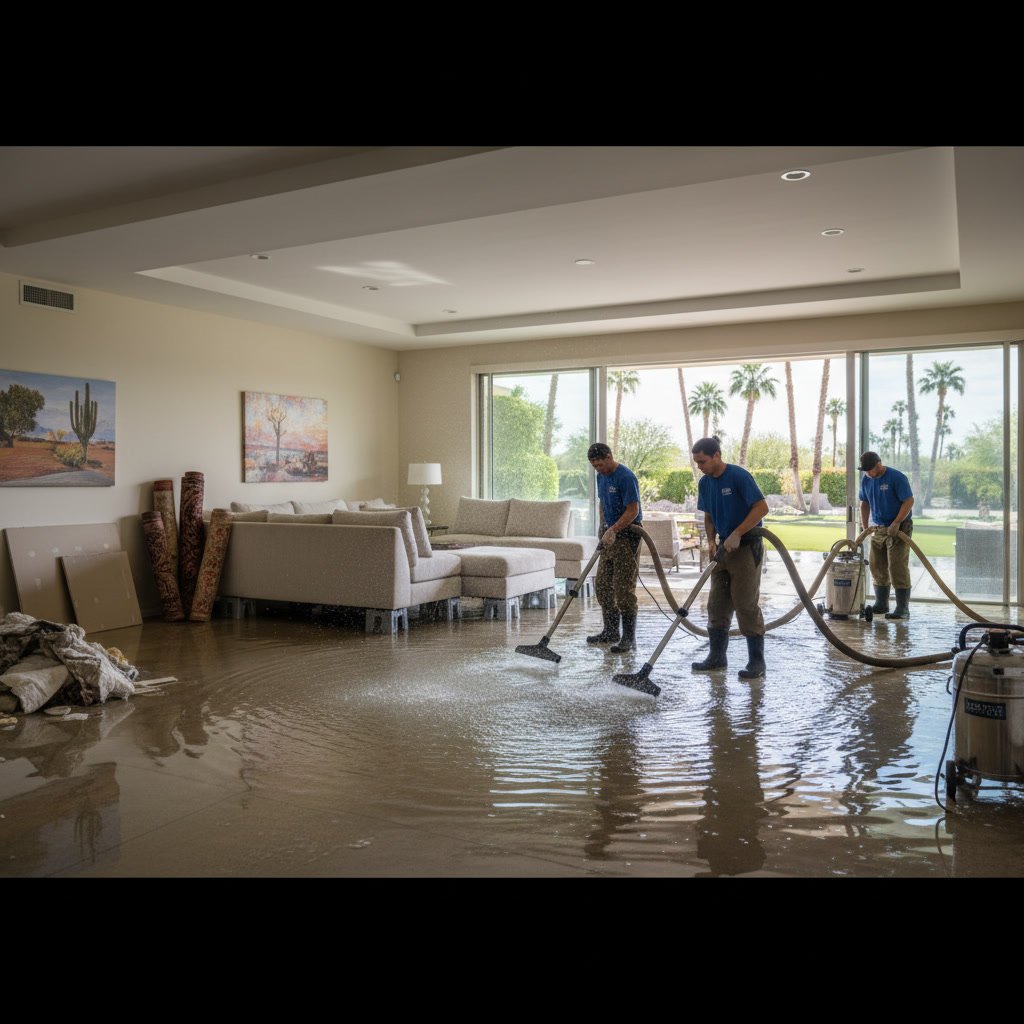
For minor flooding (less than an inch or two), a wet/dry vacuum works effectively. Empty the tank frequently and continue until you’ve extracted all visible water. For larger amounts, you may need a submersible pump, which you can rent from equipment rental companies in Palm Desert or surrounding areas.
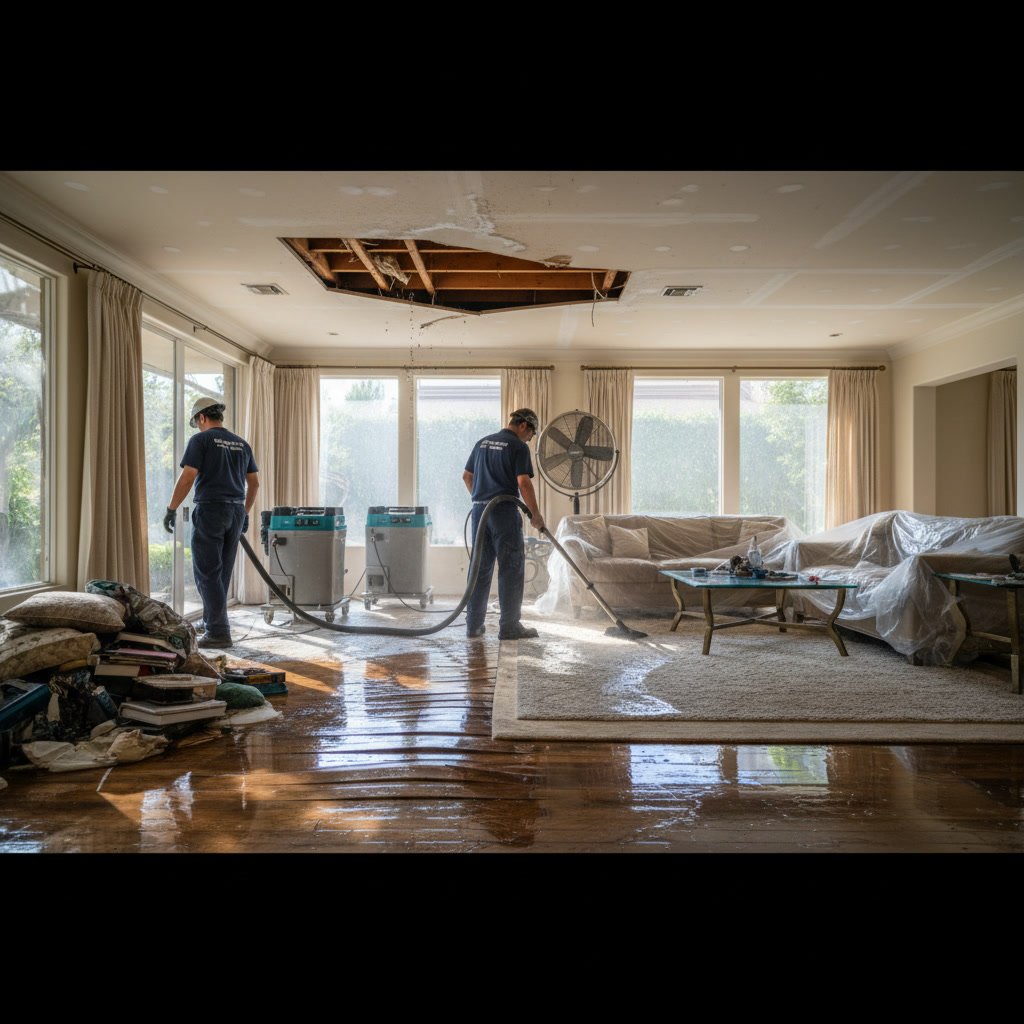
If water covers large areas or exceeds two inches in depth, professional water extraction becomes necessary. Commercial extraction equipment removes water far more efficiently than consumer tools, and professionals can detect moisture hidden in walls, under flooring, and in other concealed spaces.
Mop and soak up remaining moisture after extracting the bulk of water. The goal is to remove every bit of standing water as quickly as possible, even if surfaces still feel damp. Complete drying comes in the next phase.
Start the Drying Process Within 24 Hours
Removing standing water is only half the battle. Moisture absorbed into floors, walls, furniture, and other porous materials must be dried completely to prevent mold and material degradation.
Increase Air Circulation
Open all windows and doors in affected areas if outdoor humidity is lower than indoor levels. The Coachella Valley’s dry climate usually works in your favor here. Set up fans to create continuous airflow across wet surfaces. Position fans to blow air across floors and direct it toward windows or doors.
Point fans at walls where water wicked up into drywall. Even if the wall looks dry on the surface, moisture can travel up to two feet above the visible water line through capillary action. Industrial air movers work better than household fans for serious water damage Rancho Mirage restoration projects require.
Deploy Dehumidifiers
Dehumidifiers pull moisture from the air, accelerating drying time dramatically. A single residential dehumidifier may not suffice for significant water damage. You may need multiple units or commercial-grade equipment depending on the affected square footage.
Empty dehumidifier tanks frequently or connect them to drain continuously if that option exists. Monitor humidity levels with a hygrometer, aiming for 30 to 50 percent relative humidity. Higher levels encourage mold growth, while lower levels help materials dry faster.
Remove Wet Materials
Some materials cannot be saved once saturated. Carpet padding almost always requires replacement after flooding, even if the carpet itself can be cleaned and dried. Insulation that has absorbed water loses its effectiveness and harbors moisture that leads to mold.
Drywall wicks water upward and rarely dries completely without cutting away the saturated portions. Professionals typically cut drywall 12 to 24 inches above the visible water line to ensure all wet material is removed. Particle board, laminate flooring, and MDF furniture typically swell and deteriorate beyond repair when water-damaged.
Contact Your Insurance Company
Report water damage to your insurance company as soon as you’ve ensured safety and begun initial documentation. Most policies require prompt notification, and delays can complicate claims.
Your insurer will assign an adjuster to inspect the damage and assess your claim. Be present during this inspection if possible and share all your documentation. Ask questions about what is covered, what your deductible is, and what steps you should or should not take.
Keep receipts for all emergency supplies, equipment rentals, and professional services related to water damage mitigation. Most policies cover reasonable costs to prevent additional damage even before the claim is finalized. This includes tarps, fans, dehumidifiers, and professional water extraction.
Understand the difference between water damage coverage and flood insurance. Standard homeowners insurance typically covers sudden internal water damage from burst pipes or appliance failures but excludes flooding from external water sources. If water entered from outside during a storm or due to ground saturation, you may need a separate flood policy.
When to Call Professional Restoration Services
Some water damage situations are manageable with prompt DIY action. Others require professional expertise and equipment from the start.
Call professionals immediately if water damage affects more than one room, involves contaminated water, or if standing water exceeds two inches deep. Major appliance failures, water heater ruptures, and supply line breaks typically create too much water for effective DIY cleanup.
Professional restoration companies have moisture meters and thermal imaging cameras that detect hidden water in walls, ceilings, and subfloors. They can identify structural concerns and deploy industrial equipment that dries buildings in days rather than weeks.
If you notice any musty odors within 48 to 72 hours of water exposure, mold has likely begun growing. Mold spreads rapidly in damp conditions and creates health risks, especially for people with allergies, asthma, or compromised immune systems. Professional mold remediation becomes necessary at that point.
Key Takeaway: The longer water sits, the more expensive repairs become. What starts as a simple water extraction can escalate to mold remediation, structural repairs, and complete material replacement if not addressed within the first 24 to 48 hours.
Prevent Mold Growth
Mold can begin growing within 24 to 48 hours of water exposure. Once it establishes itself, removal becomes far more complex and expensive than prevention.
Maintain air circulation continuously until all materials are completely dry. Don’t turn off fans or dehumidifiers prematurely because surfaces feel dry to the touch. Materials like wood framing, drywall, and concrete retain moisture internally long after surfaces appear dry.
Monitor affected areas daily for signs of mold including musty odors, discoloration, or fuzzy growth on surfaces. Check inside cabinets, closets, and other enclosed spaces where air circulation is limited. Mold often appears first in these hidden areas.
Treat at-risk surfaces with antimicrobial solutions designed for water damage restoration. Standard household cleaners may not prevent mold effectively. Professional restoration services apply these treatments as part of their process.
Consider professional mold testing if your home had water damage previously, if the current damage was extensive, or if anyone in your household has unexplained respiratory symptoms after water exposure. Mold can grow inside walls and other hidden spaces where you cannot see it.
Address Repairs and Restoration
Once everything is completely dry and mold risks are eliminated, you can begin repairs. This phase restores your home to its pre-damage condition or better.
Replace any materials that were removed during the drying process including drywall, insulation, flooring, and baseboards. Match existing finishes as closely as possible unless you choose to upgrade. Many homeowners use water damage incidents as an opportunity to improve spaces with better materials or updated designs.
Test all electrical outlets, switches, and fixtures in affected areas before turning power back on permanently. Water can damage wiring even after everything appears dry externally. A licensed electrician should inspect any electrical components that were submerged or exposed to significant moisture.
Inspect HVAC systems if water reached vents, ducts, or equipment. Moisture in ductwork promotes mold growth and distributes spores throughout your home. Ductwork may need cleaning or replacement depending on exposure severity.
Repaint walls and ceilings only after confirming materials are completely dry. Painting over damp drywall traps moisture inside and creates ideal conditions for mold growth behind your fresh paint.
Long-Term Prevention Strategies
After recovering from water damage, take steps to prevent recurrence. Many water damage incidents result from preventable causes.
Inspect washing machine hoses annually and replace them every five years or when they show signs of wear. Consider upgrading to braided stainless steel hoses that resist bursting better than rubber versions. Install a washing machine pan with a drain to contain leaks.
Check water heater condition regularly. Most water heaters last eight to 12 years. If yours approaches that age, replacement prevents the catastrophic flooding that occurs when tanks fail. Install a drain pan under tank-type water heaters and ensure it drains to an appropriate location.
Maintain your roof with regular inspections, especially after wind storms common in the Coachella Valley. Replace damaged shingles or tiles promptly. Clean gutters and downspouts to ensure water flows away from your home rather than backing up under roofing materials.
Know where your main water shut-off valve is and make sure everyone in your household can locate and operate it. In an emergency, minutes matter. Consider installing automatic water shut-off systems that detect leaks and stop water flow before major damage occurs.
Frequently Asked Questions
How long does it take to dry out a house after water damage?
Typical drying times range from three to five days with professional equipment, though severe damage can take two weeks or longer. Factors include the amount of water, materials affected, outdoor humidity, and air circulation. Never rush the process, as incomplete drying guarantees mold growth and structural problems later.
Will wet drywall dry out on its own?
Drywall can dry if exposed quickly to proper airflow and dehumidification, but only if water exposure was minimal and brief. If drywall stayed wet for more than 48 hours, absorbed significant water, or wicked moisture more than a few inches up from the floor, replacement is usually necessary. Dried drywall often remains weak and prone to mold growth.
Does homeowners insurance cover all types of water damage?
Standard homeowners insurance typically covers sudden, accidental water damage from internal sources like burst pipes, appliance malfunctions, or roof leaks. It usually excludes flooding from external sources, gradual leaks, and damage from lack of maintenance. Flood insurance requires a separate policy through the National Flood Insurance Program or private insurers.
Can I stay in my house during water damage restoration?
You can often remain in your home during restoration if the affected area is limited and can be isolated from living spaces. Extensive damage requiring major demolition, or contaminated water involving sewage, usually requires temporary relocation. Professional restoration companies can advise based on your specific situation and safety concerns.
How can I tell if water damage has caused mold?
Visible signs include black, green, or white fuzzy growth on surfaces, discoloration on walls or ceilings, and peeling paint or wallpaper. Musty, earthy odors indicate hidden mold growth even when nothing is visible. If you suspect mold, professional testing identifies species and concentration levels, determining whether remediation is necessary.
Expert Water Damage Restoration in the Coachella Valley
Water damage creates stress and urgency that no homeowner wants to face. Quick, informed action in those critical first hours protects your home, your belongings, and your family’s health. Following the steps outlined here minimizes damage and sets the foundation for complete recovery.
When water damage strikes your Rancho Mirage home, Kellner Construction LLC provides emergency restoration services that stop damage progression and restore your property efficiently. With more than 40 years of construction experience serving Palm Desert, Indian Wells, LaQuinta, and surrounding Coachella Valley communities, our team responds quickly to water emergencies with professional equipment and proven techniques.
If you’re facing water damage and need immediate professional help, contact Kellner Construction LLC at +17607745333. We’re available to assess your situation, work with your insurance company, and restore your home to its original condition or better.